Many travelers assume baggage delays occur randomly. In reality, timing strongly influences whether luggage arrives on schedule. Airport baggage systems move items in coordinated waves tied to passenger surges and flight schedules. They do not operate as a continuous stream. Consequently, travelers reduce baggage delays most effectively by checking luggage early.
How System Congestion Creates Baggage Delays
Baggage systems handle enormous volumes and prioritize steady throughput over last-minute urgency. As departure time approaches, passenger traffic floods conveyors and screening equipment. This surge creates queues throughout the system. Thus, Early bags move through before bottlenecks form. Accordingly, passengers who check bags near cutoff times experience baggage delays far more often.
PGDS Design Targets Versus Real-World Performance
The TSA’s Planning Guidelines and Design Standards establish performance targets for baggage system design. Engineers aim to move a bag from distant ticket counters to sortation within about ten minutes. This target applies to most bags under ideal conditions. However, Large hub airports often exceed design assumptions due to distance and peak volumes. Therefore, early check-in helps offset real-world conditions that slow processing.
TSA Screening and Its Role in Baggage Delays
Security screening introduces major variability in processing time. Dense materials or cluttered packing can trigger alarms. TSA officers must inspect those bags manually. Or, TSA staff will remove the bag from the main flow and reinsert it from Level 3 screening back through the entire TSA screening process again, rather than manually screen a bag which may lose tracking while in transit. Thus, this interruption increases the likelihood of baggage delays. Please see Security Screening | Transportation Security Administration for further information about the TSA security screening process.
Nothing But Baggage – A Bag’s journey through the TSA Security Screening Process
In this exciting, action-packed video (well at least to us at Airport News Now it is certainly exciting to watch) from Click On Detroit | Local 4 | WDIV We see the journey of your luggage from ticketing through level 1 screening, and out to sortation. To add to the excitement, be sure to stick around to roughly the 5:00 mark where they show what TSA Level 3 screening looks like, including the use of advanced technology such as mobile baggage inspection tables. A must watch! This video is from Detroit Metro Airport (DTW) and shows their multi-million dollar baggage handling system in action.
Bag Stability, Tracking Loss, and “Unknown” Status
Automated systems require stable movement to maintain accurate tracking. A bag with uneven weight can wobble on conveyors. Inconsistent motion prevents scanners from reading identification tags reliably. When the system cannot confirm identity, it flags the bag as unknown. Staff must intervene, which increases processing time and delay risk. Also, the uneven weight combined with overstuffing a bag, causing a ‘belly’ will wobble a bag as it winds its way through the TSA checked baggage security screening process.
During that process, the baggage system maintains a virtual location of your baggage that follows along with the physical location of your bag. Consequently, should your bag move out of that tracking window due to it wobbling out of position because of overstuffing, your bag will become unknown. it will require more screening. Also, this holds true for the baggage sortation matrix. Should your bag lose its virtual tracking window while conveying to the sort pier where it is expected, it will miss that sort pier and wind up going to a default pier, or ‘jackpot’ where all missorted bags wind up. Thus, this certainly increases your bag’s time in system.
The High-Risk Final Processing Window
Airlines may accept bags close to departure, but processing still requires time. Personnel must tag, screen, transport, sort, stage, and load each item. Equipment limits and regulations prevent shortcuts. The final thirty to forty-five minutes before loading carry the highest delay risk. For example, during baggage sortation, as we discussed previously, your bag losing its virtual tracking window, and sorting to a default pier for all missorted bags, will certainly eat up 10 to 20 minutes of bag time during peak hours. Early check-in avoids this compressed processing window.
TSA-Approved Locks and Their Role in Maintaining System Flow
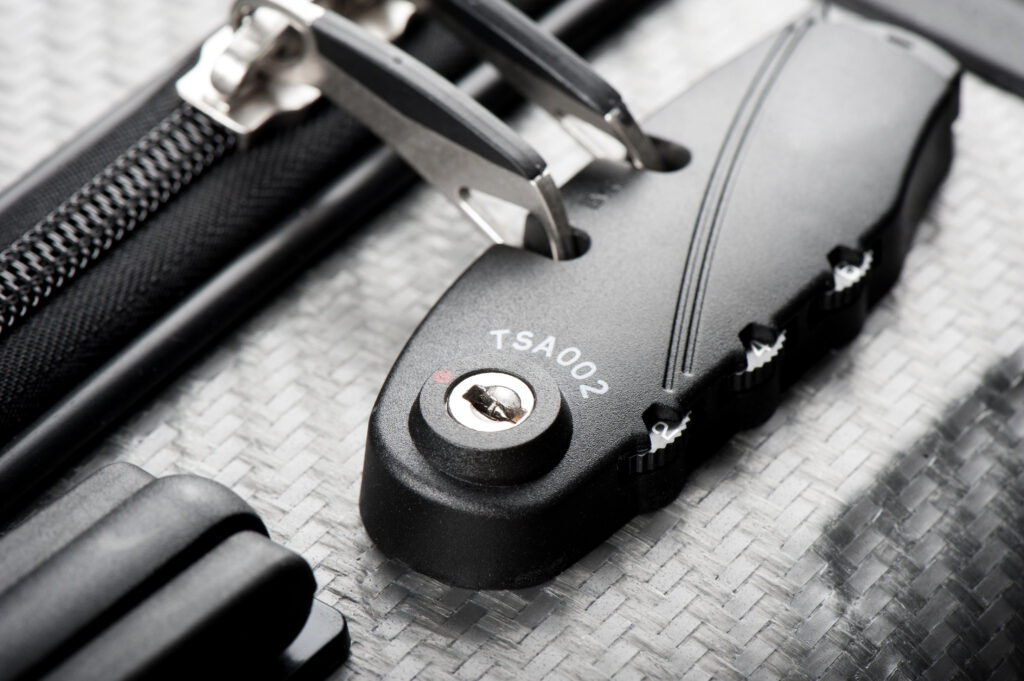
Luggage security choices can also affect whether a bag stays within the automated screening flow outlined earlier. When a bag triggers an alarm, TSA officers may need to open it inside the Checked Baggage Resolution Area to verify contents and clear the item for travel. TSA-approved locks allow officers to access and relock the bag quickly, which helps return it to the conveyor system without additional handling complications.
Non-approved locks can leave bags unsecured after inspection, increasing the likelihood of tag damage, snagging, or manual handling that slows downstream sortation. Please see the Airport News Now Article “TSA Lockable Luggage and How Approved Locks Support Screening“ for a deeper look at how compliant locks help screening proceed efficiently while protecting both your bag and its place in the baggage system.
Professional Timing Guidance to Avoid Baggage Delays
Airport professionals recommend checking bags well before boarding begins. Early entry provides buffer time for inspection and rerouting. Major hubs benefit most because systems operate near capacity during peaks. International flights require additional screening steps that increase processing time. Extra time significantly reduces exposure to baggage delays.
Why Connecting Flights Amplify Baggage Delays
Connecting itineraries require additional transfers within strict time limits. Ground crews must unload and transport each bag to the next aircraft. Screening may also occur during transfer. Tight schedules leave little margin for disruption. Early check-in improves the chance that bags complete transfers successfully.
Loading Order and Arrival Timing
Crews often stage early bags first for loading. Placement inside the cargo hold may favor those items. Bags near the cargo door typically unload sooner at arrival. Airlines cannot guarantee this outcome. However, early check-in can still improve arrival timing.
Mitigating Risk When Early Check-In Is Not Possible
Travel conditions sometimes prevent early arrival at the airport. Passengers who check bags late should protect essential items. Medications, documents, and valuables belong in carry-on luggage. Photographs of the bag and claim tag aid recovery efforts. Knowing passenger rights also helps during disruption. Please be sure to read Lost, Delayed, or Damaged Baggage | US Department of Transportation for further, more detailed information from the Department of Transportation.
Bottom Line: Time Is the Most Effective Defense Against Baggage Delays
Operational factors cause most baggage delays rather than random chance. System congestion, screening, and tracking issues intensify near departure. Designers use formal standards to target efficient processing times. Real-world conditions often exceed those assumptions at busy airports. Early check-in remains the most reliable strategy for timely baggage arrival. For further reading, IATA – Baggage Operations provides more vital information about baggage operations and the future of airport baggage handling operations.