A baggage scale can change your travel plans in seconds. You weigh your suitcase at home, you feel confident, and you expect the ticket counter number to match.
However, the airport baggage scale often reads higher and triggers overweight fees without warning. That single number can force you to pay up immediately or repack your life on the floor at check-in.
Fortunately, you can avoid most of these problems with a few simple strategies that work at any airport. This guide explains why baggage scale readings change and how you can protect yourself before you reach the counter.
How a Ticket Counter Baggage Scale Works
A ticket counter baggage scale uses a commercial platform designed for constant use, heavy loads, and fast transactions. The system measures load pressure and converts it into pounds or kilograms.
Why Ticket Counters Prioritize Speed Over Perfection
Airlines need fast throughput at the counter, especially during the morning rush and holiday travel. For that reason, the counter baggage scale focuses on stability and repeatability more than tiny measurement precision.
Why Small Differences Still Happen
Ticket counters take hits all day. Travelers slam bags onto the scale, wheels bounce, and luggage drags across the edge of the platform. As a result, a baggage scale reading at the airport can differ from a home reading even when everything works normally.
Why Baggage Scale Readings Don’t Always Match Home Weighing
Home Tools Often Drift Over Time
Many travelers rely on handheld luggage scales or bathroom methods. Those tools help, but they drift over time and rarely match a commercial baggage scale perfectly.
Even worse, travelers weigh once and stop checking. That habit creates false confidence when the airport baggage scale shows a different number.
Placement on the Platform Changes the Result
Bag placement matters. When the suitcase sits off-center, touches the counter, or hangs partially off the platform, the official baggage scale can show a higher number than expected.
Motion Creates Unstable Readings
A swinging suitcase changes weight readings. If you lift the bag and drop it with momentum, the counter baggage scale has to stabilize while vibration continues.
The Scale May Not Start at True Zero
Sometimes the baggage scale does not reset cleanly between customers. During busy periods, even small “starting weight” issues can push a borderline suitcase into overweight territory.
Portable Baggage Scale Products That Help You Weigh Correctly Before Check-In
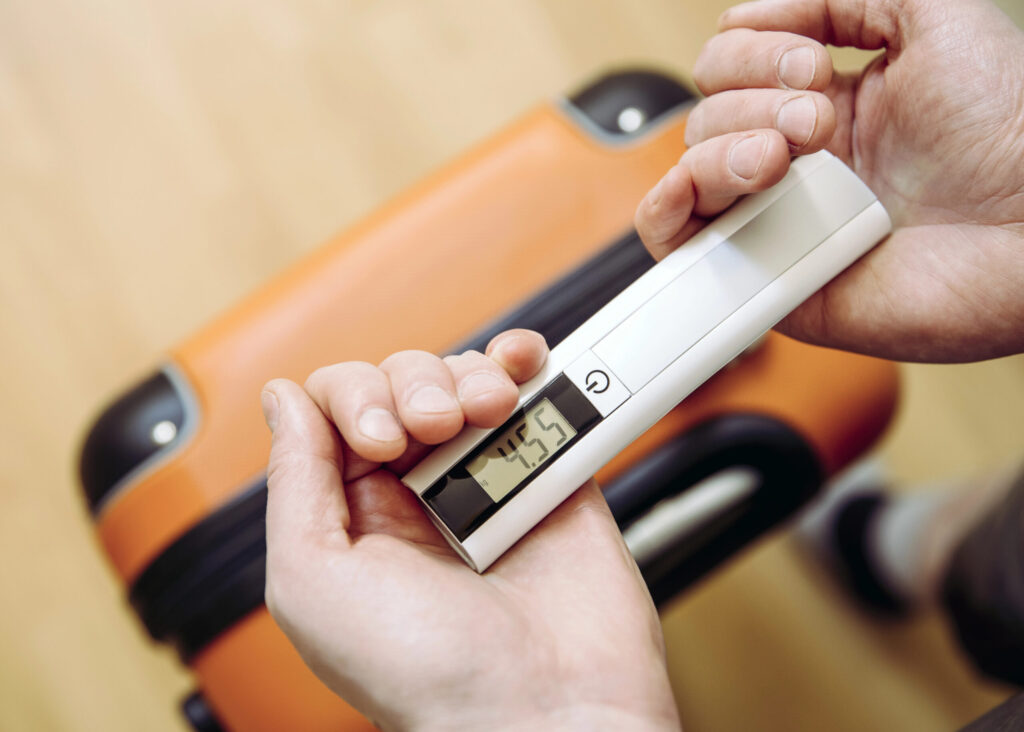
If you already know a baggage scale belongs in your travel toolkit, the next step is choosing one that fits how you actually pack and travel. In the Airport News Now Article, “Baggage Scale Portable Products to easily check your luggage weight” the focus stays on four practical portable options that help you confirm suitcase weight before you ever reach the airline counter. One choice also includes a tape measure for measuring your luggage. The Airport News Now Article also breaks down what matters most in a portable baggage scale, including secure attachment, easy readability, quick repeat checks, and compact storage for consistent travel use. With that product selection in mind, here’s what you need to know about baggage scale differences at the ticket counter and how to avoid surprise fees.
What “Calibrated” Means in Real Airport Conditions
Calibration does not mean the airport baggage scale will match your home number exactly. Instead, calibration means the device performs consistently inside an acceptable commercial range.
Airports Create Tough Environments for Scales
Airports run loud, fast, and heavy. Temperature changes, vibrations, and constant impacts challenge equipment all day. Because of that, small variations happen even when the system stays “within spec.”
The Airline Counter Number Always Wins
You can argue all day, but the counter baggage scale controls the transaction. Therefore, you should focus on prevention and packing buffers instead of fighting the reading.
The Best Tool to Reduce Baggage Scale Surprises: A Portable Luggage Scale
A portable baggage scale gives you control before you hit the check-in line.
How to Weigh Your Bag Correctly at Home
Attach the strap to a solid handle and lift straight up in one smooth motion. Hold steady and wait for the number to lock.
After that, take a second reading. If both numbers match, you can trust the result.
The Key Rule: Treat Borderline Weight as Risky
If your portable scale reads 49.5 pounds, the airport baggage scale can still push it over 50. For that reason, you should never pack “right on the line.”
The 48-Pound Rule: Your Best Buffer Against Overweight Fees
Why 48 Pounds Beats 49.9 Every Time
If the airline limit is 50 pounds, pack to 48. That simple buffer protects you when the counter baggage scale reads higher.
In addition, the cushion covers small last-minute add-ons like chargers, toiletries, or heavier shoes.
On the other hand, packing to 49.9 pounds turns check-in into a coin flip. In the end, two pounds of breathing room saves money fast.
What to Do When the Ticket Counter Baggage Scale Says “Overweight”
You can still fix the situation quickly if you stay calm and move strategically.
Step 1: Ask for a Clean Re-Weigh
If the number sits barely above the limit, ask the agent for a quick re-weigh. Place the suitcase completely on the platform with nothing touching the counter edge.
Then wait for the reading to stabilize before the agent finalizes it.
Step 2: Move Dense Items Into Your Carry-On
If the reading stays high, pull out dense items first. Shoes, toiletry bags, chargers, and heavy electronics remove weight fast.
Next, move those items into your carry-on or personal item. If you carry a foldable tote, use it as an emergency overflow bag.
Finally, re-check the baggage scale reading and finish check-in without holding up the line.
Smart Packing That Makes Baggage Scale Problems Easy to Fix
Packing style matters more than people realize, especially when the scale flips the script.
Pack Heavy Items Where You Can Reach Them
Place chargers, toiletries, and adapters near the top of the suitcase. That way you can remove weight quickly without destroying your entire layout.
Use Packing Cubes for Fast Weight Transfers
Packing cubes let you shift weight in one move instead of pulling out individual items. As a result, you can react fast when the counter scale surprises you.
Keep Your Personal Item Light on Purpose
Your personal item should stay light enough to absorb extra weight. That single choice gives you a practical backup plan when the baggage scale reads high.
Common Baggage Scale Mistakes That Cost Travelers Money
Mistake #1: Assuming Home Weight Equals Airport Weight
Home readings help, but the airport baggage scale makes the final decision. Always plan for variation.
Mistake #2: Letting the Bag Touch the Counter During Weighing
If your suitcase leans against the counter or hangs off the platform, you invite weird results.
Mistake #3: Packing Heavy Loose Items Everywhere
Loose heavy items create chaos at check-in. When the baggage scale shows overweight, disorganized packing forces you into stressful repacking in public.
Ultimately, organization prevents most baggage weight problems.
Why Airlines Enforce Baggage Scale Limits
Airlines enforce limits to keep the counter moving and protect ramp operations. Heavy bags slow down handling, increase risk of injury, and complicate loading plans.
Also, baggage policies prevent constant disputes at check-in. For that reason, airlines rely on the ticket counter scale reading as the final number.
Official Airline Baggage Weight Limits and Overweight Rules
Use these pages to confirm baggage weight limits and overweight fees before you fly:
American Airlines
Southwest Airlines
United Airlines
Delta Air Lines (Official)
Final Takeaway
A baggage scale can show a different number than your home measurement for several realistic reasons, including placement, motion, reset behavior, and device variation. Because of that, smart travelers pack with a buffer and expect minor changes at the counter.
A portable baggage scale, a two-pound safety margin, and a quick weight-transfer plan help you avoid most overweight fees. Additionally, stable weighing and clean placement reduce inconsistent readings during check-in.
In conclusion, you protect your wallet by planning around the baggage scale instead of reacting to it at the counter.