Cat Anxiety: Why Thorough Cat Travel Preparation Matters
Cats experience airports as unpredictable and overstimulating environments filled with loudspeaker announcements, fast-moving crowds, strong odors, and fluctuating lighting. These conditions overwhelm their sensory system and create elevated stress levels that lead to vocalization, escape attempts, or defensive reactions. However, when travelers prepare deliberately, they help reduce cat anxiety and stress-driven behavior throughout the journey. A comprehensive approach also reduces delays at check-in and screening and improves overall travel efficiency for both the cat and the owner.
Preparing Your Cat at Home Before the Airport to reduce Anxiety
The most effective travel preparation for your cat begins several days before arriving at the airport. When owners introduce structure early, they give their cats more time to adjust to confinement, handling, and carrier familiarity and reduce anxiety. This preparation strengthens the cat’s ability to process new stimuli once they enter the crowded terminal. Additionally, a consistent home routine sets the foundation for calmer behavior in unfamiliar environments.
Create Familiarity With the Carrier
Position the carrier in a room your cat uses daily so they can explore it freely. Add a blanket with familiar scent markers, a stable toy, or a soft item that encourages your cat to rest inside. As your cat returns to the carrier repeatedly, they build positive associations and begin viewing it as a secure resting place rather than a stressful environment. This familiarity supports emotional stability during transport, check-in, and long waiting periods in the terminal.
Review In-Cabin Airline Requirements
Each airline enforces specific rules for pet carriers, including size limits, ventilation standards, and under-seat placement guidelines. Review these rules well ahead of your flight to confirm that your carrier meets current airline criteria and provides enough space for repositioning. Early verification prevents last-minute equipment issues and ensures your pet remains compliant as well as anxious free throughout check-in. Use the links below to confirm policies directly:
United Airlines: Traveling with pets | United Airlines
Delta Air Lines: Pet Travel Overview | Delta Air Lines
American Airlines: Pets − Travel information − American Airlines
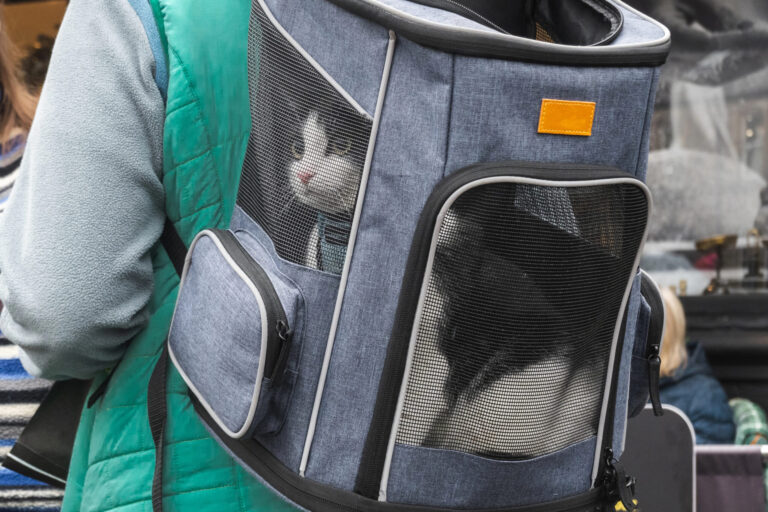
Travel Backpacks for Cat Anxiety
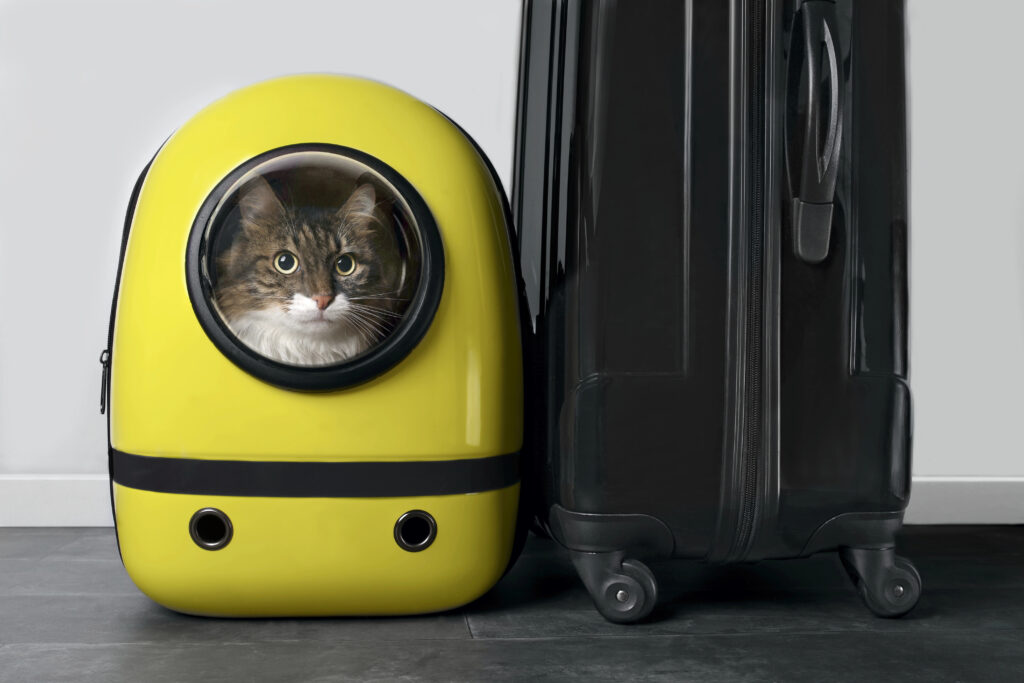
This Airport News Now article about premium pet travel backpacks designed to help anxious cats feel more secure in airport environments, focusing on enclosed designs that maintain close owner proximity, limit visual overstimulation, and promote steady airflow. Additionally, the article points readers toward airline-compliant, ventilated, and expandable backpack options that work especially well for cats prone to stress during screening, terminal movement, and boarding. As a result, cat owners can explore travel backpack products that support calmer behavior, better containment, and reduced anxiety throughout the airport journey.
Update Identification and Microchip Records
Attach a breakaway collar with accurate identification tags containing your current phone number and address. Then check your microchip registration to confirm your information matches what appears in the database. This safeguard increases the likelihood of successful recovery if your cat’s anxiety gets overwhelming and you are separated during screening or terminal movement. Confirm your microchip details through the official registry:
Microchip Lookup: Microchip Registry Lookup – AAHA
Schedule a Veterinary Visit Prior to Travel
Arrange a veterinary examination within the timeline your airline requires so your furry feline receives a valid health certificate. During this visit, explain your travel plans and describe how your cat usually reacts to noise, confinement, and stress and any other issues that causes your cat to suffer from anxiety. Your veterinarian will help determine whether calming aids, pheromone sprays, or prescription medications fit your cat’s specific needs. Because altitude and cabin pressure influence medication behavior, this medical evaluation ensures safe feline travel from departure to arrival.
Managing Your Cat’s Anxiety During Airport Security Screening
Security screening introduces the highest risk of escape because cats must leave their carrier briefly while the carrier passes through X-ray. This situation is stressful for both you and your Cat. However, owners who plan carefully maintain better control and protect their cat from unpredictable reactions. As screening environments shift rapidly, clear preparation gives you the stability needed to guide your cat safely. This stage requires deliberate handling from start to finish.
Use a Well-Fitted, Escape-Resistant Harness
Fit your cat with a vest-style harness before reaching the security line so you maintain strong control through every step of the process. A properly adjusted harness prevents slipping, twisting, or impulsive directional changes as your cat responds to environmental noise and other stress factors making them anxious. This harness also distributes pressure evenly, making the metal detector walkthrough safer and more predictable. Stable harness control forms the foundation of safe feline handling during screening.
TSA Pet Guidance: Small Pets | Transportation Security Administration
Communicate Clearly With Screening Staff
Inform the security officer that you are traveling with a cat as soon as you approach the checkpoint. Officers may direct you to a less crowded lane or provide additional space so you can maintain control during the transfer from carrier to arms. Clear communication reduces confusion and prevents rushed handling, which helps your cat remain less anxious. When everyone understands your needs, the entire screening process becomes more efficient and safer for your pet.
Re-Secure the Carrier Immediately After Screening
Carry your cat through the metal detector with a firm grip and place them back inside the carrier instantly once you reach the opposite side. Secure all carrier fasteners completely and verify each closure before retrieving your belongings. This immediate containment reduces escape risk and minimizes exposure to rapid movement and crowd noise. After securing the carrier, move to a quieter area of the terminal to reduce anxiety for your cat, as well as yourslf.
Maintaining Your Cat’s Anxiety Inside the Terminal
Once you clear security, the terminal environment becomes the next significant challenge to keep your cat less anxious. Airports contain rapidly shifting visual patterns, unpredictable noise sources, and heavy crowd flow. When travelers manage these stimuli intentionally, their cat’s anxiety subsides for longer periods. A structured approach limits sensory overload and helps your cat transition through each stage of airport movement.
Cover the Carrier to Reduce Visual Stimulation
Place a breathable towel, blanket, or cover over the carrier to restrict your cat’s exposure to sudden movement, bright lights, and constant activity. Cats react strongly to visual patterns in reflective floors, rolling luggage, and large crowd surges. By limiting visual input, you allow your cat to remain more grounded, less anxious and relaxed throughout the terminal. This technique proves especially helpful during long waits or unpredictable gate changes.
Manage Feeding and Hydration Strategically
Feed your cat several hours before arriving at the airport to support digestive stability during travel. Offer a small amount of water before boarding to prevent dehydration without causing discomfort during cabin pressure changes. This balance reduces the risk of nausea, vomiting, or restlessness inside the carrier. Careful planning helps your cat maintain physical stability throughout the trip.
Pet Relief Areas Will Not Help with Cat Anxiety
Airport pet relief zones primarily serve dogs and often overwhelm cats due to strong odors, noise, and unfamiliar surfaces. Instead, place a disposable litter pad inside the carrier during short and medium-length flights. This approach gives your cat a familiar option without introducing them to anxiety prone environments. Predictable bathroom solutions reduce stress and improve hygiene during travel.
Recognizing Triggers that Enhance Your Cat’s Anxiety at The Airport
Understanding specific airport triggers allows you to choose calmer areas and maintain structured movement. These triggers differ from home environments and often cause stress reactions even in otherwise calm cats. When you identify them early, you reduce unwanted behaviors and support a smoother experience. Awareness becomes a critical part of successful feline travel.
Key Stress Triggers for Cat Anxiety During Airport Travel
| Trigger | Description | Recommended Action |
| Loudspeaker Announcements | Sudden high-volume sounds activate startle responses and increase agitation. | Move to gates farther from speaker clusters or select quieter concourse areas. |
| Rolling Luggage & Vibrations | Wheel vibration and irregular movement create physical tension. | Choose carpeted zones or seating away from busy walkways. |
| Strong Odors & Cleaning Chemicals | Disinfectants and food smells overwhelm feline scent processing. | Keep the carrier covered and sit in ventilated, low-traffic areas. |
| Jet Bridge Noise & Pressure Shifts | Hydraulic noise and airflow changes heighten alertness. | Approach the jet bridge only during your boarding group. |
| Dense Crowd Movement | Fast crowd surges elevate stress and trigger defensive behavior. | Wait in corners or unused gate areas with steady foot traffic. |
| Gate Changes & Delays | Environmental changes disrupt predictability and increase tension. | Identify alternative calm zones to maintain consistency. |
Avoiding the Most Common Mistakes That Will Cause Cat Anxiety
Many errors occur simply because owners underestimate how strong a cat’s anxiety about airport stimuli can be. When you understand which mistakes increase stress, you can make corrections that produce calmer, safer travel. These improvements enhance control throughout the entire airport process. Every correction you make reduces risk and increases stability.
Opening the Carrier in the Terminal
This should be a no-brainer. Opening the carrier anywhere inside a terminal introduces an immediate escape risk that can escalate within seconds. Cats react strongly to noise and movement, and the terminal environment provides endless hiding locations that complicate recovery. When a cat slips free, they often run toward quiet corners, storage rooms, or under fixed seating where retrieval becomes extremely difficult.
These incidents require intervention from airport personnel and may even cause gate delays or temporary shutdowns of restricted areas. Keeping the carrier closed at all times protects your cat from sudden environmental triggers that can increase your cat’s anxiety and could send them running. This consistent containment also ensures you maintain full control during every stage of airport movement.
Using Weak or Poorly Fitted Harnesses
A harness that lacks structural support allows a cat to pull free as soon as they encounter fear-inducing stimuli. Sudden noises, rolling luggage, or crowd surges create strong reactions and increase the likelihood of slipping out. A well-fitted vest harness maintains tension across the torso and keeps your cat securely positioned during handling. This stability becomes especially important at security checkpoints where rapid movements and unfamiliar equipment overwhelm many cats. Choosing high-quality gear improves safety and reduces the chance of dangerous incidents during screening. When you secure your cat correctly, you maintain predictable control in an otherwise unpredictable environment.
Feeding Too Close to Travel Time
Feeding your cat shortly before reaching the airport increases the risk of vomiting, drooling, and digestive distress. Movement inside the terminal and shifts in cabin pressure during the flight worsen these symptoms and elevate stress. When you feed your cat earlier, you help stabilize digestion and reduce discomfort throughout the travel timeline. Balanced feeding also prevents motion-induced nausea, which increases anxiety during long periods inside the carrier. Controlling the timing of meals supports calmer behavior across every stage of the journey. Proper food scheduling becomes a key part of preparing your cat for predictable, stable travel.
Allowing Strangers to Approach the Carrier Worsens Cat Anxiety
Strangers often approach traveling pets out of curiosity, but this attention may increase anxiety for cats. The combination of unfamiliar voices, scents, and movement disrupts the controlled environment you build for your cat. These encounters can trigger defensive behavior or heightened anxiety that lasts for the remainder of the trip. Keeping the carrier close to your body sets a clear boundary and prevents unnecessary interaction. Distance from strangers protects your cat’s emotional stability and limits their anxiety. When you manage proximity intentionally, your cat maintains steadier behavior inside the terminal.
Waiting in High-Traffic, High-Noise Zones
Terminals contain loud, fast-paced areas that overwhelm a cat’s sensory system and raise anxiety levels. Food courts, moving walkways, and gate podiums expose your cat to abrupt noise spikes and unpredictable movement patterns. These environments interrupt emotional regulation and create repeated stress responses. Choosing quieter corners or unused gate areas gives your cat consistent conditions and fewer disruptive triggers. Low-stimulus spaces allow your cat to settle and rest without processing constant change. Relocating to these calmer areas improves comfort and supports controlled, predictable behavior.
Not Preparing for Delays or Gate Changes
Delays, reassignments, and sudden relocations occur regularly in air travel and disrupt a cat’s sense of predictability. Cats rely on stable conditions, so rapid environmental change increases stress and confusion. When owners plan secondary quiet areas beforehand, they avoid rushed transitions that may overwhelm the cat. Predictable movement keeps the cat grounded and reduces reactive behavior during unexpected operational changes. Preparation gives you more control when the airport shifts quickly around you. This proactive approach strengthens your cat’s emotional resilience during complex travel situations.
Dealing With Cat Anxiety After Landing
After landing, your cat must process a new set of sounds, scents, and movements while still carrying residual stress from the flight. Crowded aisles, deplaning noise, and bright lights challenge their ability to remain calm. When you guide your cat slowly through these transitions, you help reduce their anxiety one step at a time. Controlled pacing minimizes exposure to unpredictable triggers and supports behavioral recovery. Each deliberate move reduces sensory overload and helps your cat adjust to the post-flight environment. A steady, measured approach protects your cat during this final stage of the journey.
Transition Slowly After the Flight to Mitigate Cat Anxiety
The deplaning environment includes loud cabin sounds, shifting passengers, and narrow walkways that elevate tension. Holding the carrier securely prevents sudden jolts that could increase your cat’s stress. Moving slowly through the aisle helps your cat process activity without feeling overwhelmed. Gradual transitions counteract the abrupt sensory changes that occur when the cabin doors open. This pacing supports emotional regulation and reduces the risk of reactive behavior. When you control the tempo, your cat adapts more comfortably to the airport surroundings thus reducing stimuli that results in cat anxiety.
Navigate the Terminal With Steady Movement
Cat anxiety will be triggered by just about anything. Among those triggers, rapid walking exposes your cat to sudden stimuli that may trigger fear or agitation. Maintaining steady, predictable movement prevents overstimulation and helps with cat anxiety. Keeping the carrier close to your body limits contact with rolling bags, crowds, and unpredictable foot traffic. Controlled pacing through busy walkways decreases the chance of stress spikes during arrival. This consistent approach benefits both the traveler and the animal by reducing unnecessary tension. Smooth navigation sets the tone for a calmer exit from the terminal.
Reintroduce Familiar Scents and Items to Mitigate Cat Anxiety
Once you reach your destination, familiar scents help your cat decompress after intense stimulation. Providing blankets, toys, or scent-specific items re-establishes comfort and stability while reducing excessive anxiety. These familiar cues ease the transition from airport chaos to a calmer environment. When your cat senses objects they recognize, they relax more quickly and rebuild emotional balance. Restoring routine reinforces their sense of safety after a demanding travel day. This reintroduction process remains critical for post-flight recovery and long-term comfort.
Final Thoughts on Cat Anxiety
Effective measures to reduce cat anxiety depends on early preparation, secure handling, and strategic movement at every stage of the airport experience. When travelers anticipate environmental triggers, maintain strong control of equipment, and avoid common mistakes, they significantly reduce stress and improve safety. Structured routines and informed decision-making help cats regulate their reactions even in crowded terminal environments. With careful planning and deliberate handling, cat travel becomes more predictable, more stable, and far safer for both the animal and the traveler.