Introduction: Why Knowing Oversize Baggage Categories Matters
If you’re traveling with unique or large equipment, understanding what qualifies as oversize baggage or non-conveyable baggage is essential. As a result, the Transportation Security Administration (TSA) and airlines have strict standards that determine how these items are handled. Knowing these classifications can save you time, money, and frustration at the airport. This guide breaks down the TSA’s definitions, airline-specific policies, and the differences between oversize, non-conveyable, and out-of-gauge (OOG) baggage.
What Is Oversize Baggage?
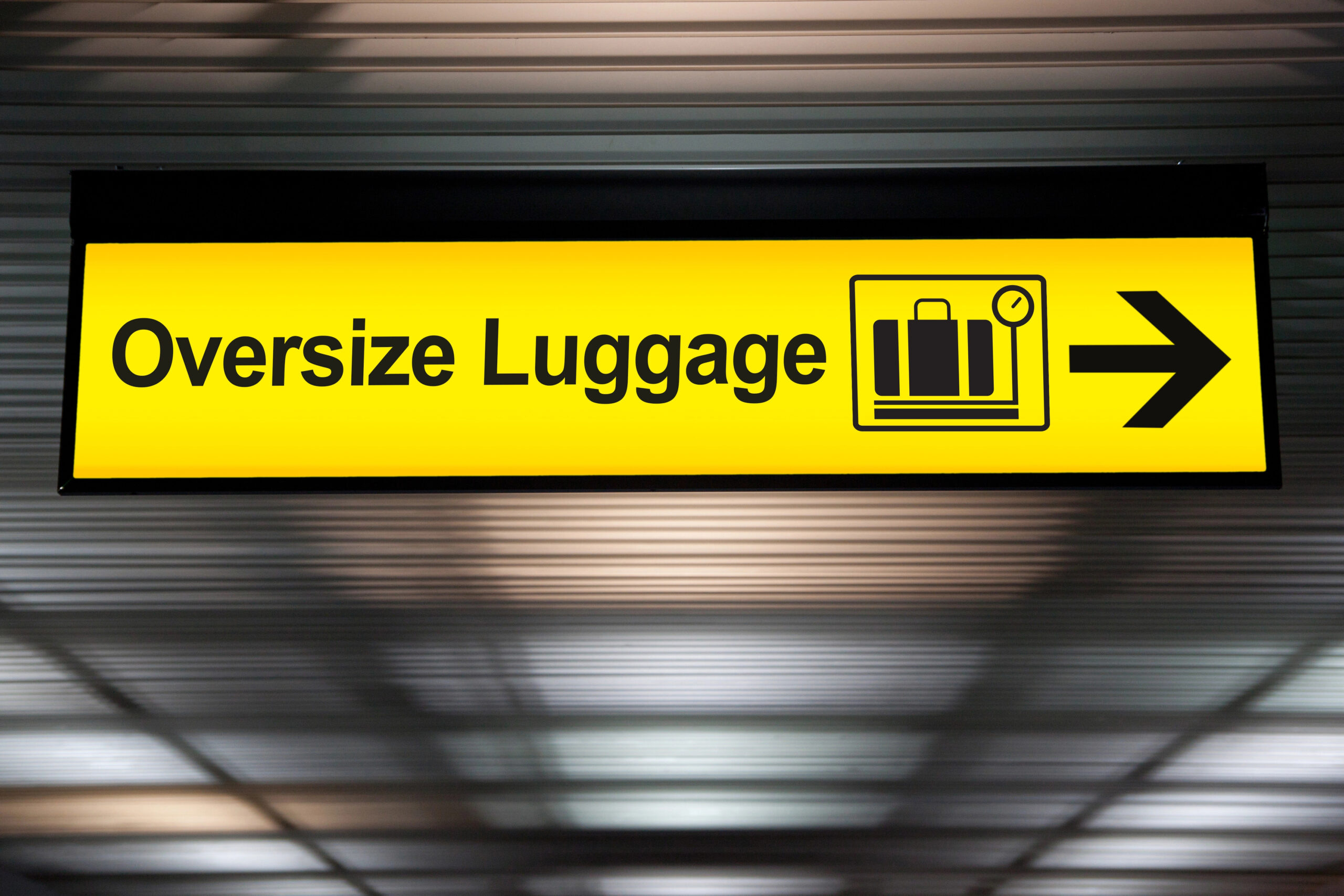
According to the TSA’s Planning Guidelines and Design Standards (PGDS), baggage that exceeds the dimensional capacity of a standard baggage handling system is classified as oversize. Therefore, some airports operate dedicated oversize conveyor systems capable of accommodating larger items, but in many cases, such baggage requires manual handling due to its size, fragility, or shape.
Oversize Baggage Dimensions
| Baggage Type | Length (inches) | Width (inches) | Height (inches) | Weight (lbs) |
| Standard (Max) | 54 | 24 | 30 | 120 |
| Oversize (Max) | 120 | 36 | 33 | 150 |
For additional details on restricted and permitted items, visit the official TSA resource: What Can I Bring?
Airline Oversize Baggage Policies
Each airline defines oversize baggage slightly differently and charges fees accordingly. For example, these charges vary by season, route, and weight. Below are current links to major U.S. airlines’ official baggage policies (as of 2025):
- American Airlines – Checked Baggage Policy
- United Airlines – Baggage Calculator
- Southwest Airlines – Baggage Policies
Each of these pages provides detailed, up-to-date information on size limits, weight restrictions, and seasonal fee adjustments for oversize luggage. That said, please also see the Airport News Now Article about how packing smartly eliminates the time that your bag is under the TSA screening prcoess.
Compression Luggage

Packing smartly also includes choosing the right luggage to help you pack smartly. In this article from Airport News Now, about Compression Luggage, we discuss products with built in compression, as well as compression bags you can utilize in your existing luggage.
Book a Nearby Hotel If Your Oversize Baggage Gets Delayed
Travelers who check oversize or OOG baggage often deal with longer wait times at arrival because their gear comes out on a separate belt, oversized chute, or designated claim point. Consequently, the Travelpayouts Hotel Booking Widget helps you find nearby hotels quickly so you can secure a place to stay if your equipment gets delayed, arrives after hours, or requires a next-day pickup from the baggage services office. Use this tool to compare hotel options near the airport and book a room that keeps you close to your gear if your oversized item doesn’t arrive on the normal schedule.
What Is Non-Conveyable Baggage?
Non-conveyable baggage refers to items that cannot travel through a standard airport baggage handling system. To clarify, these include items too large, too heavy, fragile, or irregularly shaped to be processed by conveyor equipment. Beyond size and shape, this category also includes sensitive cargo such as human remains and live animals.
Examples of Non-Conveyable Baggage
- Musical instruments in rigid cases
- Mobility aids like large electric wheelchairs
- Human remains shipped in approved containers
- Pets traveling in checked baggage
- Fragile or high-value equipment requiring special handling
Airline Non-Conveyable Guidelines
Each airline handles non-conveyable baggage differently. For example, airline policies regarding the transport of human remains is a special consideration for non-conveyable baggage. Below are direct links to official airline pages addressing special circumstances:
- American Airlines – Transporting Human Remains
- American Airlines – Pet Policy
- United Airlines – TrustUA Human Remains Program
- United Airlines – PetSafe Program
- Southwest Airlines – Ship With Heart (Human Remains)
- Southwest Airlines – Pet Travel Policy
Non-conveyable items often bypass automated sorting systems and are processed manually by ground service staff. In many cases, travelers should expect additional handling time and fees for these items.
Understanding Out-of-Gauge (OOG) Baggage
Out-of-Gauge (OOG) baggage includes items that technically fit on conveyors but fall outside the scanning or sorting parameters of Explosive Detection Systems (EDS). In other words, these bags are still conveyable but require additional handling or manual intervention at specific points. Examples include oddly shaped boxes, sports equipment, or cargo with irregular surfaces that confuse sensors.
While OOG baggage does not incur the same fees as oversize or non-conveyable items, it can still delay your luggage due to manual routing or screening. Therefore, airports handle OOG items through specialized conveyors within the Checked Baggage Inspection System (CBIS) to maintain efficiency and safety.
When “Undersized” Items Cause Oversize Problems
Some items technically qualify as oversize due to their length but slip past conveyor sensors because of their slim shape. Notably, hockey sticks, skis, or fishing rods, may pass under photo-eye sensors undetected. As such, this creates issues at diverter points, where the system attempts to route the item mid-transfer, potentially damaging both the equipment and your baggage.
For such items, airports typically rely on oversize conveyors or manual handling. Travelers carrying long, narrow items should package them securely in rigid, durable containers to protect them from damage during manual or automated handling.
Oversize and Non-Conveyable Baggage: Cost Considerations
Oversize and non-conveyable baggage almost always incur additional fees. Specifically, airlines may charge per item, or per weight class. That being said, seasonal demand, destination, and aircraft type all influence pricing. Before traveling, check your airline’s most current baggage policies to avoid unexpected expenses at the counter.
Airlines also offer baggage forwarding programs for high-value or bulky shipments. Third-party services like Luggage Forward specialize in door-to-door transport of oversize items. While these services carry higher upfront costs, they can be cost-effective when factoring in convenience, reduced airport stress, and potential airline surcharges.
Final Thoughts: Plan Ahead for Oversize and Non-Conveyable Baggage
Traveling with oversize, non-conveyable, or out-of-gauge baggage doesn’t have to be stressful. Understanding TSA and airline classifications before you pack saves time and prevents unpleasant surprises. Ultimately, the key is preparation—measure your luggage, verify size limits, and read your airline’s baggage policy well before your departure date. If you’re transporting sensitive or heavy items, coordinate with the airline’s special assistance department or cargo team in advance.
By staying informed, you’ll ensure a smoother experience from check-in to arrival, keeping your belongings—and your sanity—intact.
Affiliate Disclosure:
Some links in this article direct you to third-party travel partners, booking platforms, and service providers. If you purchase a product, book a reservation, or sign up for a service through these outbound links, Airport News Now may earn a commission from the merchant at no additional cost to you. These commissions help support the site’s research, writing, and operations.
Airport News Now maintains full editorial independence. All recommendations are based on real traveler needs, operational airport knowledge, and objective evaluation — never on commission potential. You are under no obligation to use these links, but doing so helps keep the website free and accessible for all readers.
For more information on affiliate partnerships, please review each vendor’s official policies on their respective websites.